On 9 September, the weekly Mass celebrated in the European Parliament’s meditation room took place within the context of the Season of Creation, offering participants an opportunity to pray and reflect on the Christian call to care for our common home. During the celebration, Fr. Manuel of COMECE reflected on three themes that lie at the heart of the Christian response to the ecological crisis: contemplation, conversion and stewardship.
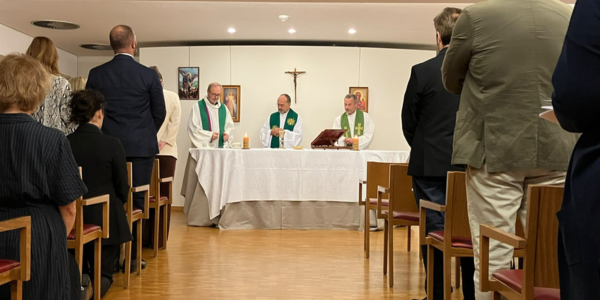
In his homily, Fr. Manuel of COMECE reflected on three themes that lie at the heart of the Christian response to the ecological crisis: contemplation, conversion and stewardship. Drawing on the readings of the day and the message of Pope Leo XIV for the World Day of Prayer for the Care of Creation, he invited participants to renew their relationship with both the Creator and creation.
The first call was to contemplation. Referring to the Book of Wisdom, Fr. Manuel reminded the assembly that creation is more than a collection of resources or a reality to be managed. It is a gift that reveals the Creator and invites us to look at the world with wonder and gratitude. Before entering debates about policies, technologies or economic solutions, Christians are called to ask a more fundamental question: what is the world we have received, and from whom have we received it?
The homily then turned to conversion. Echoing Pope Leo XIV’s message for this year’s World Day of Prayer for the Care of Creation, Fr. Manuel highlighted the connection between environmental degradation and another profound wound of our world: war. Armed conflicts not only take human lives but also devastate ecosystems, contaminate land and water, and leave lasting scars on communities and future generations.
Yet the deeper challenge, he noted, is spiritual. The wounds inflicted on creation and on one another reflect something wounded within the human heart. Care for creation cannot therefore be reduced to a political programme alone. It begins with a change of heart: moving from domination to responsibility, from possession to gratitude, and from indifference to care.
The third theme was stewardship. Reflecting on the Gospel account of Jesus calming the storm, Fr. Manuel reminded participants that human beings are not the owners of creation but its stewards. Creation has been entrusted to humanity’s care, but it ultimately belongs to God. This perspective calls for humility and responsibility in the exercise of power, knowledge and political leadership.
In a time marked by ecological and social crises, Christians are invited to use their gifts, resources and responsibilities in ways that serve life and the common good. True stewardship means acting decisively while recognising that we are not the absolute masters of the world we inhabit.
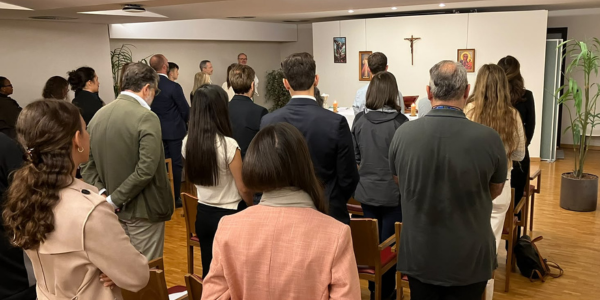
Concluding his reflection, Fr. Manuel invited the assembly to pray for “the eyes to contemplate creation, the heart to care for what has been entrusted to us, and the faith to know that Christ is in the boat, even when we think he is not there.” His final reminder captured the spirit of both the Season of Creation and the Christian call to ecological responsibility:
“Creation is God’s gift, our common home is our responsibility“.