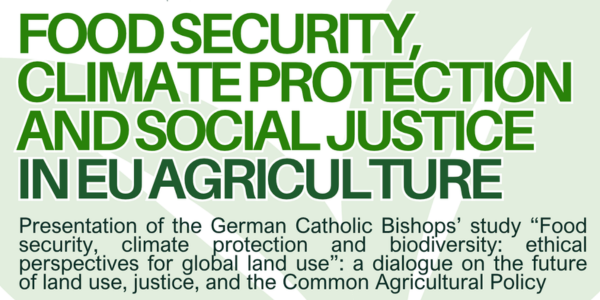
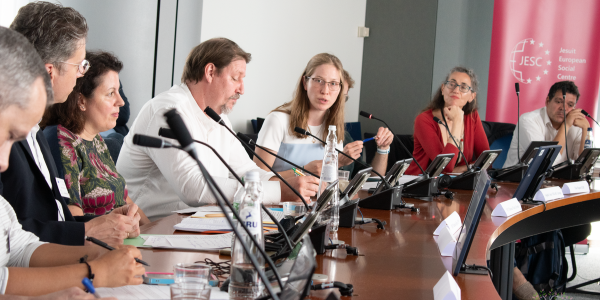
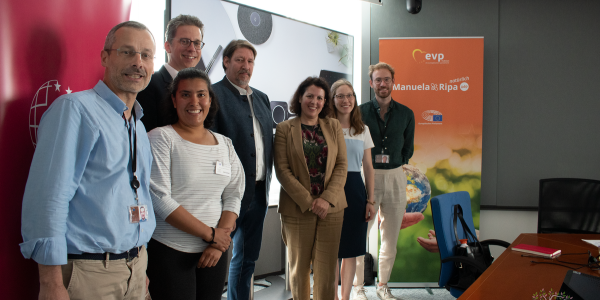
On 22 June 2026, ELSiA, together with the Jesuit European Social Centre (JESC), convened a dialogue at the European Parliament to reflect on one of the defining challenges of our time: how to ensure food security while protecting our climate, restoring biodiversity, and sustaining rural communities across Europe.
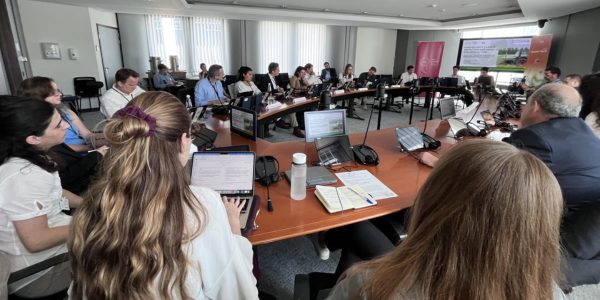
Bringing together policymakers, representatives of civil society, academia, and voices from the young farming community, the conversation highlighted a growing recognition that these priorities cannot be addressed in isolation. As pressures on land intensify, agriculture is asked to do more than ever, producing food, mitigating climate change, safeguarding ecosystems, and supporting livelihoods, within the limits of a fragile planet.
From an ELSiA perspective, this challenge speaks directly to the vision of Laudato Si’, which calls us to recognise that “everything is interconnected” and that care for creation is inseparable from justice for the most vulnerable. As Pope Francis reminds us, “we are faced not with two separate crises, one environmental and the other social, but rather one complex crisis” that demands an integrated response.
This same moral urgency was echoed just days earlier by Pope Leo XIV in his address to the World Food Programme in Rome. Speaking at a time of rising global hunger, he reaffirmed that access to food is not optional, but “a fundamental human right,” and warned of a world where “conflicts are ‘fed’ more readily than people are nourished.” For ELSiA, these words resonate deeply: the way we produce, distribute, and consume food is not only a technical or economic issue, but a profoundly ethical and spiritual one.
The dialogue drew on recent research emphasising that land use must be approached from this holistic perspective. Land is not merely a commodity; it is a shared gift, entrusted to humanity for the common good. As Laudato Si’ reminds us, the earth “sustains and governs us, and produces various fruit,” yet today “cries out to us because of the harm we have inflicted on her.” Decisions taken in Europe therefore have far-reaching consequences, shaping global food systems, ecosystems, and the lives of vulnerable communities worldwide.
Participants underlined that policies must reflect this ethical responsibility. Respecting planetary boundaries must go hand in hand with fairness, ensuring that the benefits and burdens of our food systems are more equitably shared. As Pope Leo XIV reminded the international community, responding to hunger is not simply humanitarian action, but part of a broader commitment to justice, stability, and human dignity.
A key message emerging from the dialogue is that farmers must be recognised and supported as essential partners in this transition. Across Europe, they are already contributing to biodiversity protection, carbon sequestration, and the stewardship of landscapes—often without adequate recognition. From a Laudato Si’ perspective, this calls for an economy that values care, not only productivity, and that ensures dignified livelihoods for those who work the land.
At a time when discussions on the future of the EU budget and the Common Agricultural Policy (CAP) are intensifying, these questions take on particular urgency. The choices Europe makes today will shape not only its own food systems, but also its contribution to global solidarity. Pope Leo XIV warned that hunger “undermines the capacity of societies to build resilient institutions” and fuels wider instability—reminding us that our decisions have consequences far beyond our borders.
This dialogue reaffirmed the importance of creating spaces where ethical reflection, scientific knowledge, and lived experience can come together. For ELSiA, this is at the heart of an ecological conversion—one that transforms not only policies, but also relationships: with the land, with one another, and with future generations.