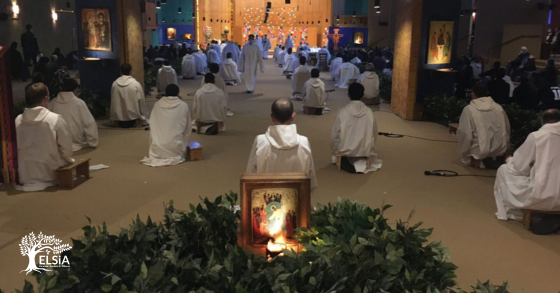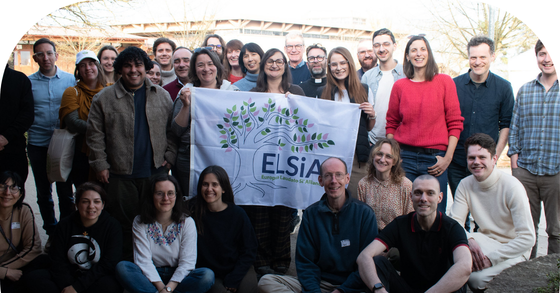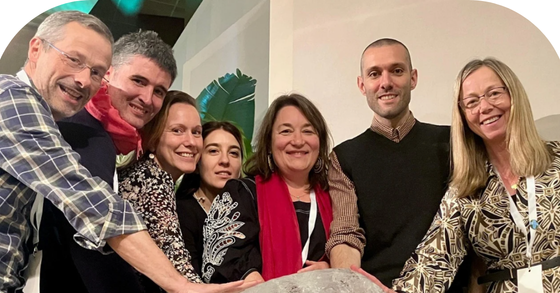
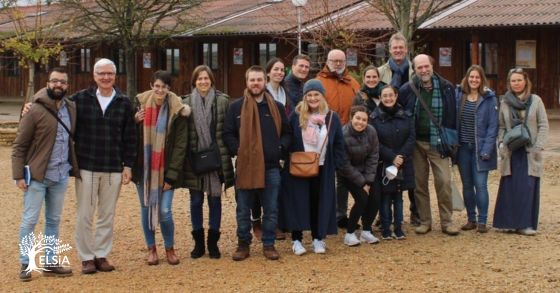
From 12–14 November, ELSiA held its first workshop on eco-spirituality and its role in responding to today’s environmental challenges, in Taizé. The event brought together Catholic organisations dedicated to promoting ecological justice, offering participants an opportunity to reflect on theology, human responsibility towards the Earth, and the hopes and fears that many people experience in the face of the climate crisis.
The workshop began with an in-depth lecture by Michael Rosenberger, who introduced the concept of integral ecology. Highlighting some of the most pressing environmental threats, he emphasised the importance of Laudato Si’ as a key framework for addressing the ecological crisis through spiritual and practical action.
Participants then explored ecological spirituality through inspiring figures from the Christian tradition. Martin Grüger reflected on the life and visions of Hildegard von Bingen, whose writings emphasised the interconnectedness of all creation. Edmond Grace SJ presented the spiritual journey of Ignatius of Loyola, emphasising how his personal struggles had led him to recognise God’s presence throughout creation. Meanwhile, Brother Alois shared his reflections on the legacy of Brother Roger of Taizé, whose vision linked a simple lifestyle with solidarity with creation.
Meanwhile, Brother Alois reflected on the legacy of Brother Roger of Taizé, whose vision linked a simple lifestyle with a commitment to caring for the environment.Biblical and theological perspectives also shaped the discussions. Ottilia Lukacs offered an ecological interpretation of the Book of Genesis, presenting principles of eco-justice that emphasise care for the Earth. Eric Charmetant encouraged participants to consider how lifestyle changes and spirituality could drive ecological transformation, drawing connections between Laudato Si’ and the ideas of the philosopher Arne Næss and his concept of deep ecology.
The final presentation, given by eco-journalist Christine Kristoff-Lardet, showcased practical examples of communities across Europe working towards ecological conversion. Her research demonstrated the challenges and creativity involved in building more sustainable and collaborative relationships with nature.
The weekend concluded with participants reflecting on their shared experiences and identifying key messages to take back to their respective organisations. Ultimately, the workshop reinforced the importance of eco-spirituality as a source of hope and motivation for continued ecological engagement.